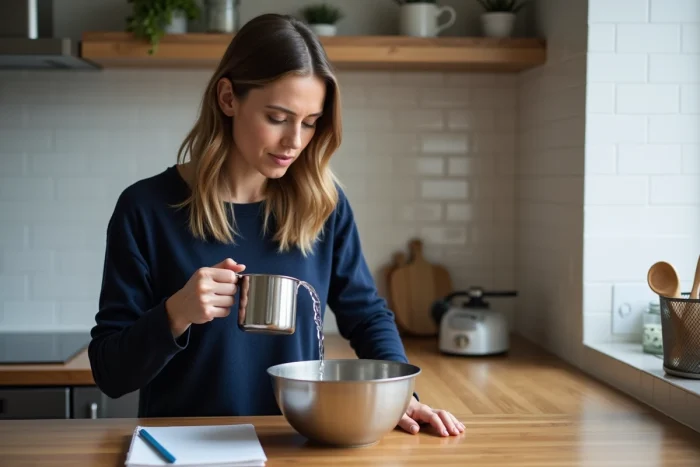
300 grams will never weigh as much as a liter and vice versa, but the temptation to confuse them remains in the kitchen. Conversions between weight and volume come into play in every recipe, yet reality demands knowledge of the density of the ingredient in question. Using the same ratio for flour, sugar, or oil? A classic mistake, but each food has its own equation.
Differences between grams and milliliters: what you really need to understand before converting
In cooking, the distinction between grams and milliliters is paramount. The former weighs, the latter measures space. To connect the two, it all comes down to density. Water, the universal reference, simplifies the task: 300 g equals 300 ml. But as soon as it comes to flour, sugar, or oil, the comparison becomes complicated. The same weight will never occupy the same volume from one ingredient to another.
Density reflects this relationship between mass and volume. A concrete example: 300 g of sugar will take up less space than 300 g of flour. This density fluctuates depending on compactness, sifting, or even the brand. To convert 300 g to ml reliably, knowing this value becomes essential.
Converting from milliliters to grams is not intuitive: a precise recipe? Sometimes you need to pull out the chart or apply a formula. Let’s take milk: its density is close to that of water, making conversion simple. Honey or shredded coconut? The calculation diverges. Each food has its method.
Home cooking thrives on these adjustments. We weigh, we pour, we check. The success of conversions hinges on understanding this mechanism between mass and volume. Keep this in mind before tackling the next recipe.
How to convert 300 g to ml depending on the ingredient? Methods that make life easier in the kitchen
To convert 300 g to ml, the method always depends on the nature of the ingredient. Water remains the exception: 300 g is 300 ml, no calculation needed. Once the density varies, you must adapt: oil, flour, and sugar each deserve their formula. The reflex: consult a conversion chart or, for atypical products, take a look at the packaging.
For common liquids (water, milk, oil), a kitchen scale with a tare function offers appreciated reliability. You place the container, reset to zero, and pour until you reach 300 g. For oil, density: 0.92, meaning 300 g will yield about 326 ml. Flour, being lighter, will take up more space: 300 g of flour is nearly 570 ml.
Here are some benchmarks for different ingredients:
- Water: 300 g = 300 ml
- Oil: 300 g ≈ 326 ml
- Flour: 300 g ≈ 570 ml
The measuring cup can be helpful, but beware of pitfalls: for dry ingredients, a packed volume does not weigh as much as an aerated volume. Better to use the scale, especially for baking where precision makes the difference. Those who enjoy quick conversions keep a practical guide or a conversion table handy to adjust stress-free according to what’s in the pantry.
Concrete examples and tips for successful conversions in everyday life
The conversion from milliliters to grams occurs everywhere: pancake batter, homemade sauce, vinaigrette adjusted to the milliliter. To avoid approximations, a few habits make a difference. First rule: identify the density of the ingredient. 300 g of water? 300 ml, no surprise. Milk follows the same path. For flour or sugar, expect a volume well above the weight.
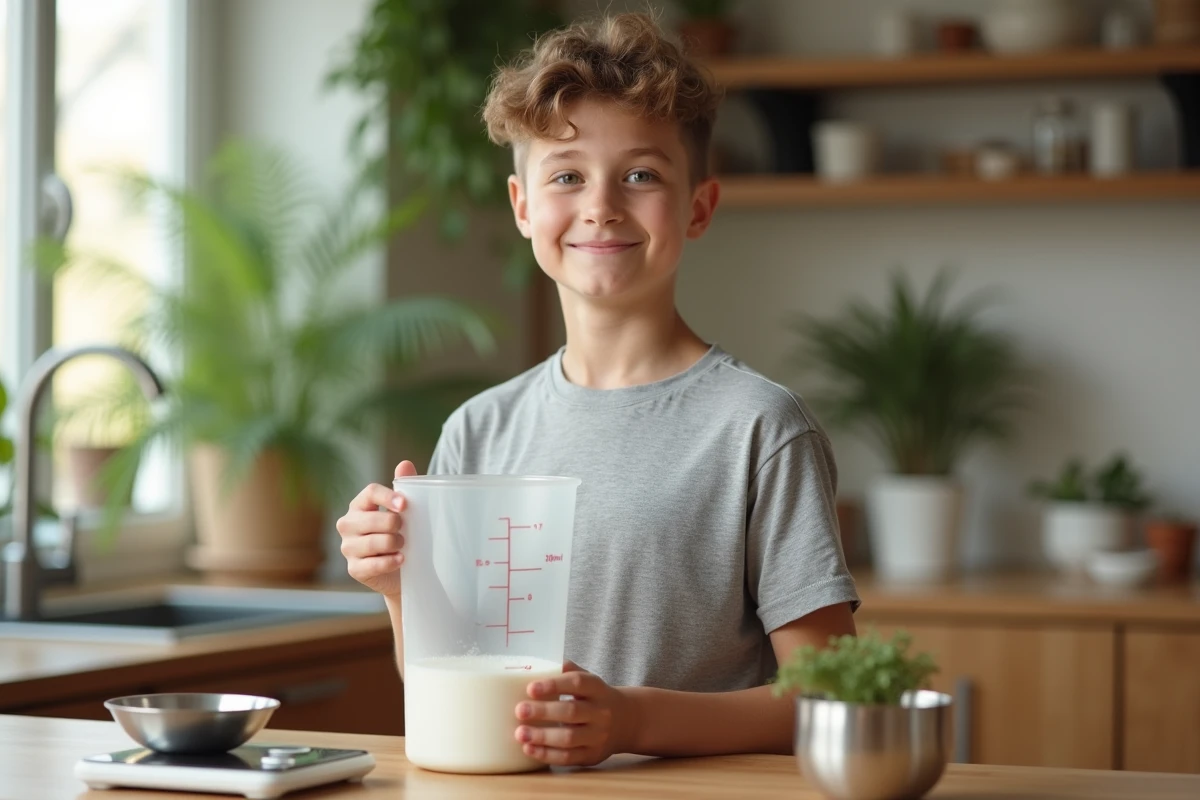
In baking, respecting proportions determines the final texture. Prefer the scale: 300 g of flour fills almost two standard large glasses. A graduated measuring cup indicating the type of ingredient helps avoid discrepancies. With liquids, go slowly: 300 ml of water or milk guarantees a smooth and homogeneous batter, without unpleasant surprises.
To navigate better, here are three concrete tips:
- To convert easily, rely on a serious conversion table, especially for uncommon ingredients.
- When in doubt, always choose weighing, especially in recipes where every gram counts.
- Adapt the tool to the situation: the scale is essential if precision is your priority, while the measuring cup is handy for quick tasks.
When the recipe mentions 30 cl of milk, remember: one centiliter equals 10 ml. So, 300 ml is 30 cl. These automatisms, once acquired, simplify life behind the stove and leave more room for creativity.
Ultimately, the right conversion is the one that allows you to achieve a dough that rises, a moist cake, or a creamy sauce, without ever getting the proportions wrong. Numbers are not abstract: they transform cooking into a living laboratory, where every measure counts and where, sometimes, success comes from a simple glance at the right conversion table.