Installing a new socket, replacing a fuse box or running a circuit for a water heater: electrical work directly affects the safety of everyone in the home. Before cutting into a wall, you need to understand what the regulations require, identify the protective devices to install and know when to call in a professional. Here’s a look at the steps that really matter.
Scope of electrical work and applicable standards
Have you noticed that online advice often talks about “bringing an installation up to code” without explaining what that actually involves? The distinction can make a real difference to your budget and project timeline.
The NF C 15-100 standard, revised in August 2024, applies to new installations and to the parts of an installation that are actually renovated. It does not require an entire existing installation to be upgraded if the work is limited in scope. Replacing a consumer unit or adding a circuit in one room does not automatically mean rewiring the entire property.
The first step before any work begins is to define its scope precisely. Adding sockets in a kitchen is different from a full renovation in terms of paperwork, equipment and final inspection. The scope determines whether you need a certificate of compliance (Consuel). To get a better idea of what a project might involve, explore the work carried out by Vite Un Électricien ! to see the different types of electrical work available.
Consumer unit and circuit breaker: the heart of electrical safety
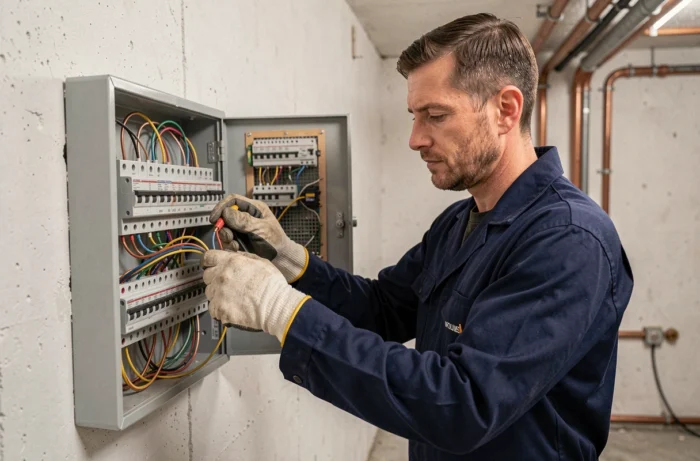
The consumer unit centralises protection for all the circuits in the home. It is the first thing an electrician checks during an inspection, and the first to be replaced when an installation is several decades old.
Main circuit breaker and emergency shut-off
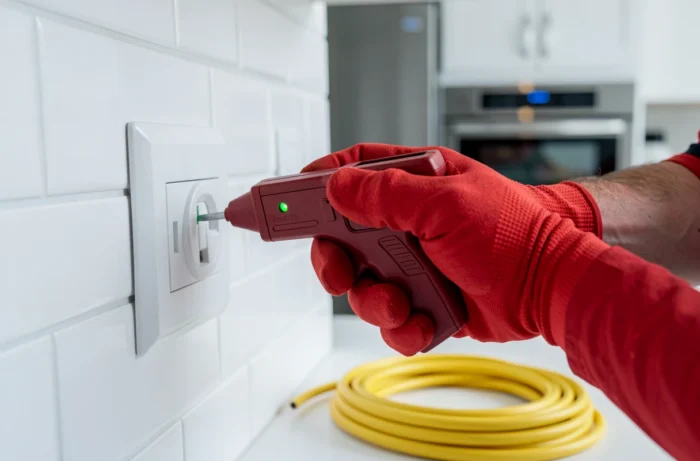
The service cut-out (often called the main circuit breaker) lets you disconnect power to the entire home in one action. Before working on any circuit, switch off the main circuit breaker and then check with a voltage tester. Working on a live circuit, even a simple switch, carries a risk of electric shock.
Mandatory residual current protection
A residual current device detects current leaking to earth, typically when a stripped wire touches a metal casing or moisture creates a conductive path. The standard requires at least one 30 mA RCD at the head of each group of circuits.
A 30 mA RCD cuts the power before the human body is exposed to a dangerous electric shock. In an older installation without this protection, adding an RCD is the most urgent safety upgrade.
Protection for each individual circuit
A properly equipped consumer unit needs more than an RCD. Every circuit (lighting, sockets, oven, hob, water heater) must have its own miniature circuit breaker, rated according to the cable cross-section and the expected load.
- A lighting circuit is protected by a low-rated circuit breaker and wired with a smaller cross-section cable, as the power demand is modest.
- A standard socket circuit serves a limited number of outlets, each protected against overload by a suitably rated circuit breaker.
- High-power appliances (oven, induction hob, water heater) each have a dedicated circuit with a higher-rated circuit breaker and a larger cross-section cable.
- Bathroom circuits must comply with specific protection zones, including minimum distances between water outlets and electrical equipment.
Each dedicated circuit reduces the risk of overload and makes faults easier to locate. If a circuit breaker trips, you immediately know which part of the home is affected.
Consuel certificate and electrical inspection: two separate procedures
These two terms are often confused, even though they apply to different situations and involve different parties.
A Consuel certificate is required for a new installation and for a full renovation when the network operator has disconnected the installation at the customer’s request. It confirms that the installation complies with current standards before power is restored. Replacing the consumer unit alone does not automatically trigger the Consuel requirement.
An electrical inspection applies in a different context: selling or renting a property with an installation that is more than fifteen years old. It identifies any issues but does not certify compliance. An inspection may flag items for correction without legally requiring the owner to bring everything up to the latest NF C 15-100 requirements.
Electrical work during renovations: practical pitfalls to avoid
Renovation work comes with constraints that don’t arise in new builds. The most common mistakes aren’t always the ones you might expect.
- Undersizing the consumer unit: allowing enough module space for future circuits avoids having to replace the enclosure a few years later.
- Overlooking equipotential bonding in the bathroom, which connects all metal parts (pipes, bath, radiator) to earth to prevent dangerous differences in electrical potential.
- Leaving old conductors in place without mechanical protection, which fails to meet the minimum safety requirements set by Consuel and the Promotelec association.
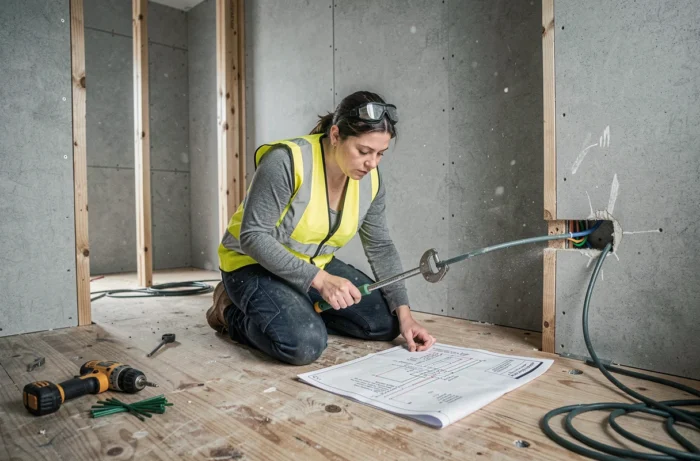
Mechanical protection for conductors is a safety check that is often overlooked during renovations. Exposed wires or open junction boxes pose a direct risk of short circuits or fire.
One final practical point: switching off the power does not always guarantee that a conductor is de-energised. A cable may be supplied by a nearby circuit that has not been correctly identified, especially in older installations where circuits are not labelled. Using a voltage absence tester (VAT) before every task is the only reliable precaution. This simple habit can make the difference between a controlled job and an avoidable accident.