
You arrive at Bordeaux Airport on a Friday evening. The queue at the rental desk stretches for twenty metres, and the model you booked three months earlier is no longer available. Renting a car while travelling offers freedom, provided you plan ahead for the details that can turn a formality into a headache. Excess charges, free-flow tolls and returning an electric vehicle: the contract’s blind spots deserve as much attention as the advertised price.
Free-flow tolls and rental cars: watch out for charges
On several roads in France, toll barriers have disappeared. Cameras read your number plate and charge you automatically. With a personal vehicle fitted with a toll tag, everything is handled without any action on your part. With a rental car, it’s a different story.
The rental company may recharge the toll to you, along with an administration fee that can sometimes exceed the toll itself. Whether you choose professional car rental with Carfully or another transparent provider, check who is responsible for paying the toll and by what deadline. Without a compatible, active toll tag, you must pay the operator within the specified time to avoid a surcharge.
Always keep your payment receipt. If you are charged twice (by both the operator and the rental company), this proof of payment will help you dispute the charge.
Rental car excess and insurance: what your bank card really covers
The excess is the amount the renter must pay in the event of damage before the basic insurance cover kicks in. It can run to several hundred euros, and the rental company will often place a hold for this amount on your bank card when you collect the vehicle.
Excess waiver at the desk or separate cover
At the rental desk, you’ll almost always be offered an excess waiver. The daily rate is high, but the cover applies directly. Alternatively, you can take out supplementary insurance with a third party before your trip, or use the cover included with some premium bank cards.
Supplementary insurance reimburses the excess, but does not eliminate the need to pay upfront. The renter pays the rental company first, then claims reimbursement. So check the eligibility requirements, coverage limits and exclusions in advance, rather than comparing only the price of the options offered at the desk.
- Check your bank card’s coverage limit: some cards only cover rentals of less than 30 days or exclude certain vehicle categories.
- Ask for written confirmation of the excess amount before signing the contract, not when you return the vehicle.
- Keep a copy of the contract, the vehicle inspection report and all written correspondence with the rental company. If you dispute a charge, a written complaint with supporting documents is your first recourse.
Electric car rental: what to check before setting off
Rental companies are offering more and more electric vehicles, and their rental terms include details you won’t find with a petrol or diesel model.
Battery charge and charging cables
When you collect the vehicle, record the exact battery charge level and check that the cables and adapters are present. Return charging requirements vary from one rental company to another: some require a minimum charge level, while others charge extra if the vehicle is returned below a certain threshold.
Charging at a rapid-charging station while travelling often costs more than slow charging. Plan your stops to prioritise compatible, lower-cost chargers. In winter or on motorways, the actual range can differ significantly from the figure shown on the dashboard.
A more thorough vehicle inspection
As well as checking for the usual scratches and dents, photograph the dashboard display showing the mileage and battery level. If there’s a dispute when you return the vehicle, these timestamped photos can serve as evidence. Also check the condition of the vehicle’s charging ports, which are often overlooked during a standard inspection.

Joint vehicle inspection: the only reliable protection against disputes
Whether the vehicle is electric or petrol-powered, the joint inspection is a crucial part of the rental process. Any scratch or dent not reported at pick-up could be charged to the renter on return.
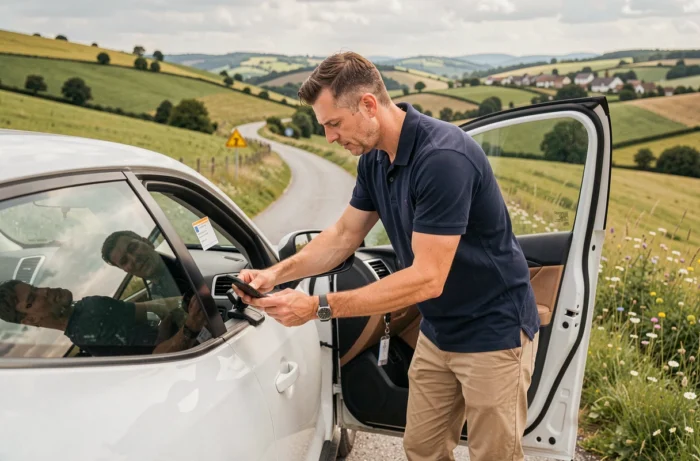
Take the time to walk around the entire vehicle with the agent, preferably in daylight. Point out every defect, however minor, and make sure it is recorded on the inspection report. Photograph every angle of the vehicle, including the roof, wheels and windscreen.
When you return the vehicle, ask for a return inspection report signed by both parties. If the agent refuses or says the inspection will be carried out later, note the time and the agent’s name, and keep your own photos. If you are charged unfairly, a written complaint accompanied by this evidence will help you dispute the charge with the rental company and, if necessary, a consumer association.
The best car rental for a trip isn’t necessarily the cheapest. It’s the one where you understand every line of the contract before turning the key.