
Decor trends are no longer limited to choices of colors or furniture. Since 2024, several European and French regulatory frameworks are changing the way furniture and upholstery textiles are designed, documented, and brought to market. These developments directly influence the materials available, the finishes offered, and the reuse channels, with concrete consequences for anyone considering rethinking their interior.
Reuse and decorative furniture: what the REP 2024-2029 specifications change
In France, the 2024-2029 specifications of the REP sector for furniture elements strengthen the objectives of repair, reuse, and recycling.
In practical terms, this means that manufacturers and distributors must organize collection and promote the second life of furniture. For an individual setting up their living room or bedroom, the offer of refurbished furniture is expanding, and retailers are beginning to structure their take-back circuits.
Finding a wooden dresser or a vintage armchair is no longer a marginal act. It is a direction supported by regulation, which enhances the availability of quality pieces in the second-hand market. To discover decor on Angie Sweet Home, this reuse logic is also reflected in the selections offered, between vintage furniture and artisanal pieces.
Upholstery textiles and PFAS ban: which fabrics for your interior
Since January 1, 2026, a French ban applies to PFAS (per- and polyfluoroalkyl substances) in clothing, shoes, and waterproofing products. The extension to upholstery textiles is planned for January 1, 2030, which directly concerns curtains, sofa fabrics, cushions, and coverings.
The stain-resistant and water-repellent treatments used on many living room fabrics still rely on these substances. In a few years, manufacturers will need to offer alternatives. Some suppliers have already switched to PFAS-free finishes, while others are waiting for regulatory deadlines.
What this means for purchasing fabric or a sofa
If you are investing in a sofa or curtains today, checking the composition of surface treatments becomes relevant. A raw linen or untreated cotton fabric does not raise this question. However, fabrics sold as “stain-resistant” deserve a review of their technical data sheet.
- Fabrics made from natural fibers (linen, cotton, wool) without chemical treatment remain the safest long-term options in light of regulatory developments
- Oeko-Tex or GOTS certifications allow for verification of the absence of problematic substances, but do not specifically cover PFAS in all cases
- Full-grain leather or woven microfiber coverings offer natural stain resistance without resorting to fluorinated treatments
These elements will need to be verified in the official regulatory text before making any purchasing decisions motivated solely by this criterion.
European ESPR regulation and digital passport: towards documented interior decoration
The European ESPR regulation gradually introduces requirements for sustainability, reparability, and recycled content for many product categories. A delegated act dedicated to furniture is in preparation, with implementation expected by 2030.
The central idea is the digital product passport. Each piece of furniture could eventually be accompanied by a sheet detailing its materials, reparability, and environmental footprint. For interior decoration, this changes the game: a buyer will be able to objectively compare the durability of two coffee tables or two wooden shelves.
A still theoretical but structuring impact
The available data does not allow for conclusions about the exact form these product sheets will take. Technical discussions are ongoing at the European level. What is certain is that the choice of a durable piece of furniture will become verifiable, not just declarative.
For a living room or bedroom decoration project, this perspective encourages prioritizing manufacturers who are transparent about their materials and processes. Certified solid wood, removable assemblies, and solvent-free finishes fit into this logic.
Recovered construction materials: a decor trend rooted in reality
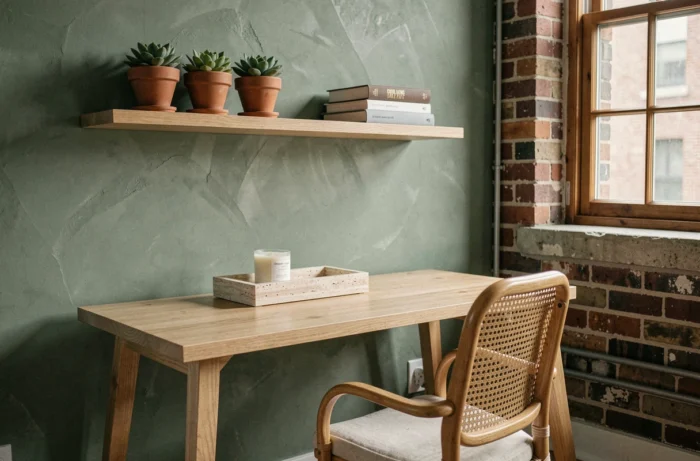
Decoration from construction sites is gaining visibility. Antique parquet, reclaimed bricks, repurposed ironwork: these elements are no longer confined to a “loft” style reserved for a few insiders. The development of reuse channels in Île-de-France and other French regions is gradually structuring the offer.
A reclaimed cement tile or an old beam brings a texture and patina that no new material can replicate. This is an aesthetic argument, but also a choice consistent with regulatory directions on reducing construction waste.
- Platforms specializing in the reuse of construction materials allow sourcing lots of tiles, parquet, or joinery at prices often lower than new
- Integrating these materials sometimes requires preparation work (sanding, treatment, cutting) that must be anticipated in the project’s budget and timeline
- Some artisans specialize in the installation of old materials, with expertise adapted to the irregularities of these pieces
Colors and style: what is emerging for living spaces
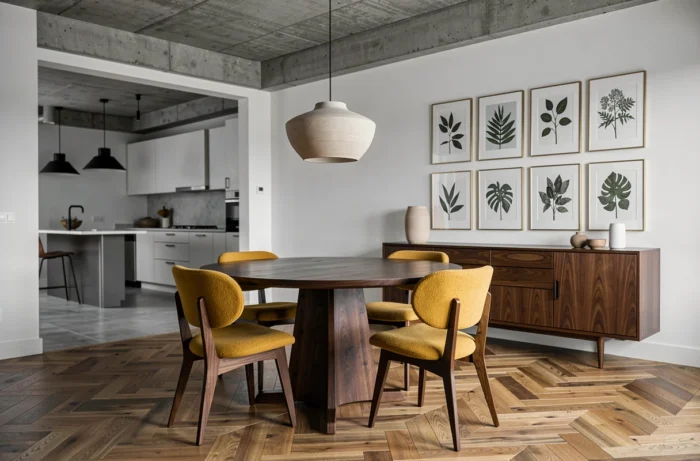
The palettes dominating recent projects revolve around earthy tones (sand, terracotta, deep green) associated with raw materials. Dark wood, particularly walnut, remains very present in living and dining room furniture. Curved and organic lines continue to replace strict right angles in modern furniture.
Personalization takes precedence over uniform style. Mixing a vintage piece with a contemporary piece of furniture, pairing a natural fabric with a reclaimed metal structure: these combinations reflect an approach to interior decoration where comfort and the history of each object matter as much as the overall visual coherence.
Current decor trends are not just a matter of taste. They are part of a changing regulatory framework, between a strengthened REP sector, the gradual ban on PFAS, and the future digital product passport. To enhance an interior, understanding these developments allows for making choices that will remain relevant well beyond the current season.