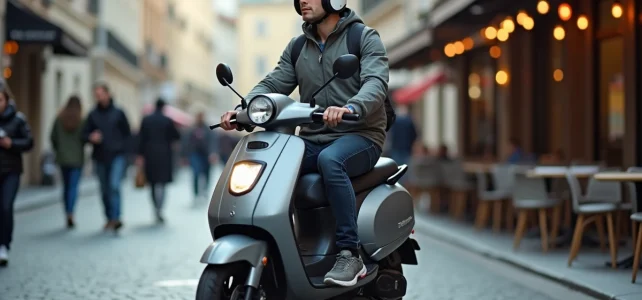
On a gray card or a technical sheet, the difference between 49 cc and 50 cc is just one cubic centimeter. In practice, this tiny gap can change the homologation category of the scooter, the type of license required, and even the amount of insurance. Before signing an order form, it is wise to understand what each term covers, as the consequences go far beyond just the mechanics.
Homologation L1e-B and displacement threshold: what the gray card really says
When picking up a scooter from a dealer, the document that counts is not the sales brochure, but the European certificate of conformity. The category L1e-B (moped limited to 45 km/h) requires an engine with a displacement not exceeding 50 cm³. An engine of 49.9 cc fits into this category just like a 50.0 cc.
Related reading : Differences Between Clothing and Accessories: How to Properly Distinguish Each Category?
So why do some manufacturers list 49 cc on the product sheet? The answer lies in the safety margin regarding the regulatory threshold. By marking 49 cc instead of 50 cc, the manufacturer avoids any disputes during homologation or inspections. It is an administrative labeling choice, not a change in the engine block.
To truly understand the differences between 49cc and 50cc scooters, one should look at the homologation category listed on the gray card rather than the round number displayed in a catalog.
Recommended read : What alternatives to use to replace coconut in your savory dishes?
49cc or 50cc scooter: the real distinction lies in the intended use
A fourteen-year-old teenager getting an AM license to go to high school and an urban delivery person making deliveries do not view their two-wheeled vehicles the same way. However, the displayed displacement guides the legal framework in which each operates.
Strict moped: staying under the 45 km/h limit
A homologated moped, whether it shows 49 or 50 cc, is factory-limited to 45 km/h. The AM license is sufficient and is accessible from the age of 14. Insurance is generally cheaper than for a light motorcycle, and the vehicle is not subject to technical inspections for motorized two-wheelers in most cases.
This is the classic scenario for the first scooter: short trips in the city, easy parking, moderate maintenance costs. Here, whether the sheet indicates 49 or 50 cc makes no difference in daily use.
50cc model designed to be derestricted to the motorcycle category
Some models labeled 50 cc are designed from the outset to switch to a higher category (L3e) once the restriction is removed. The engine can then exceed 45 km/h, which implies a different license, motorcycle insurance, and enhanced equipment obligations.
A 49 cc is always classified as a moped, with no legal possibility of being derestricted to the motorcycle category. This is the most concrete difference between the two labels: the 49 cc locks the use as a moped, while the 50 cc can (depending on the model) open the door to light motorcycle use.
Euro 5+ and the shift to injection: impact on engine choice
Since the gradual implementation of the Euro 5 and then Euro 5+ standards for mopeds, manufacturers have widely adopted electronic injection on 4-stroke engines. This shift has had a direct effect on the commercial labeling of scooters.
Many brands (Peugeot, Piaggio, Kymco) now prefer to mark 49 cc on their Euro 5+ models to clearly stay within the limits of the L1e-B category. The 4T injection engine is calibrated with a displacement slightly below the threshold, which simplifies homologation procedures across all European markets.
For the buyer, this means that the mention of 49 cc on a new scooter often reflects the current anti-pollution standard rather than a technically different engine from an older generation 50 cc. Feedback on this point varies by model, but the mechanical basis remains comparable.
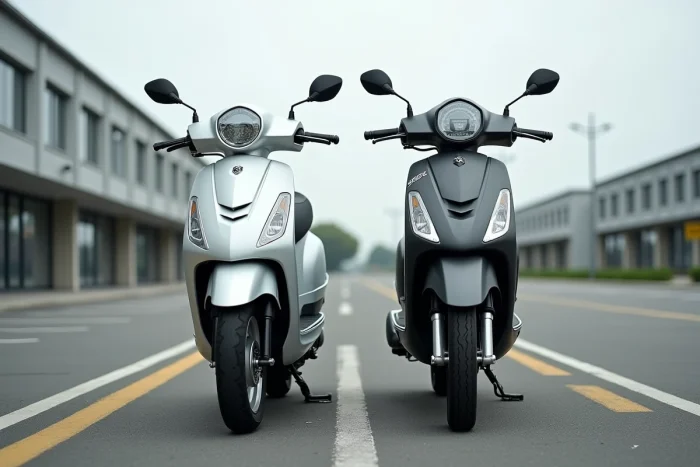
Concrete check points before buying a 50 or 49cc scooter
Rather than focusing on one cubic centimeter, it is more efficient to check a few specific elements when comparing two scooters.
- The homologation category on the gray card (L1e-B for moped, L3e for light motorcycle): this determines the necessary license, not the displayed displacement number on the fairing.
- Euro 5 or Euro 5+ compliance: a non-compliant used model may pose problems for resale or during an inspection. Check the certificate of conformity.
- The type of engine (2-stroke or 4-stroke): 2Ts are disappearing from new catalogs with Euro 5+, but remain common in the used market. Maintenance and consumption differ significantly.
- The moped insurance rate: it varies according to the age of the driver, the model, and the geographical area. Requesting a quote before signing avoids unpleasant surprises.
In the used market, a scooter labeled 50 cc may have been derestricted and then restricted again. Checking the maintenance history and the condition of the variator allows spotting any past manipulation that could affect the vehicle’s reliability.
Budget and insurance: where the cubic centimeter really matters
When purchasing, a new 49 cc scooter and a new 50 cc scooter of the same range are in the same price range. The financial difference appears more over time.
A 49 cc moped strictly limited to 45 km/h generally benefits from lower insurance premiums than a 50 cc homologated in the light motorcycle category. For young drivers, this gap can represent a significant part of the annual budget.
Routine maintenance (oil change, belt, brake pads) remains similar between the two. It is mainly the availability of spare parts that deserves attention: models from major brands like Peugeot or Piaggio have a wider distribution network, which reduces repair times and costs.
The choice between 49 cc and 50 cc is less about the mechanics and more about the legal framework and intended use. A buyer who wants to remain unambiguously in the moped category has no reason to look for a “real” 50 cc. Those considering a future derestriction to the motorcycle category must verify that the chosen model is intended for this use, or risk riding outside the legal framework.